OK1M-PyminiNEC3 – antenna modelling in Python
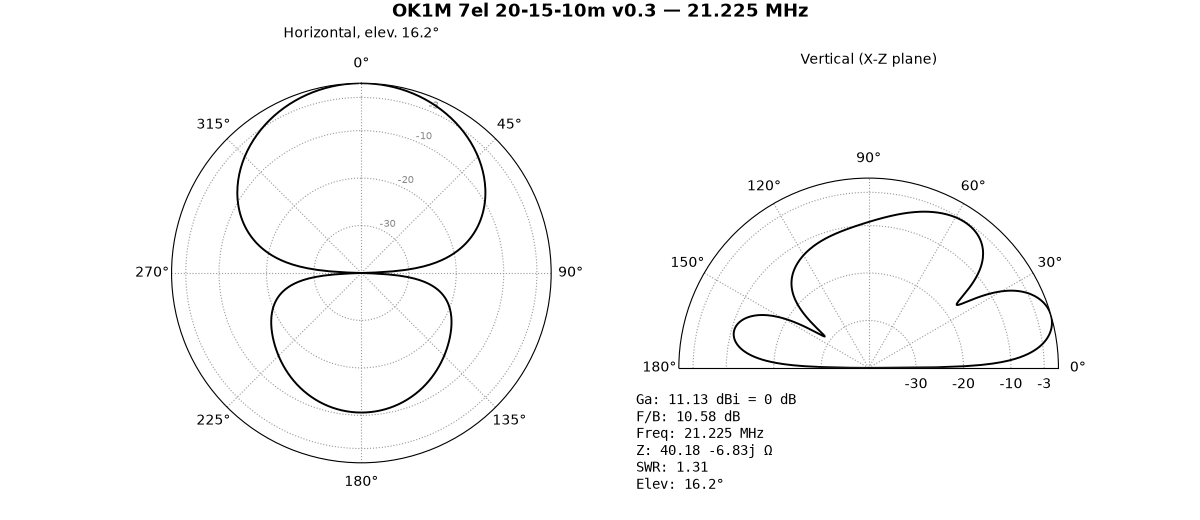
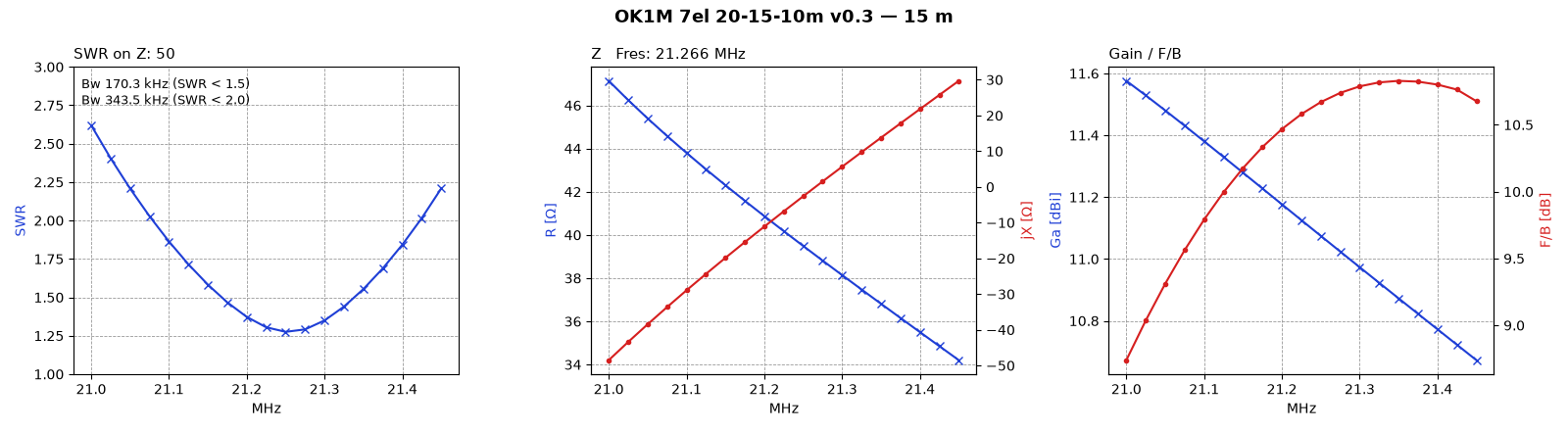
OK1M-PyminiNEC3 is an antenna modelling platform with the MININEC 3 calculation core and MMANA-GAL pro conventions. It reads antenna models in the MMANA-GAL format (.maa), computes them with the method of moments and produces the same results as MMANA-GAL pro: impedance, SWR, gain, F/B, elevation angle, radiation patterns and currents.
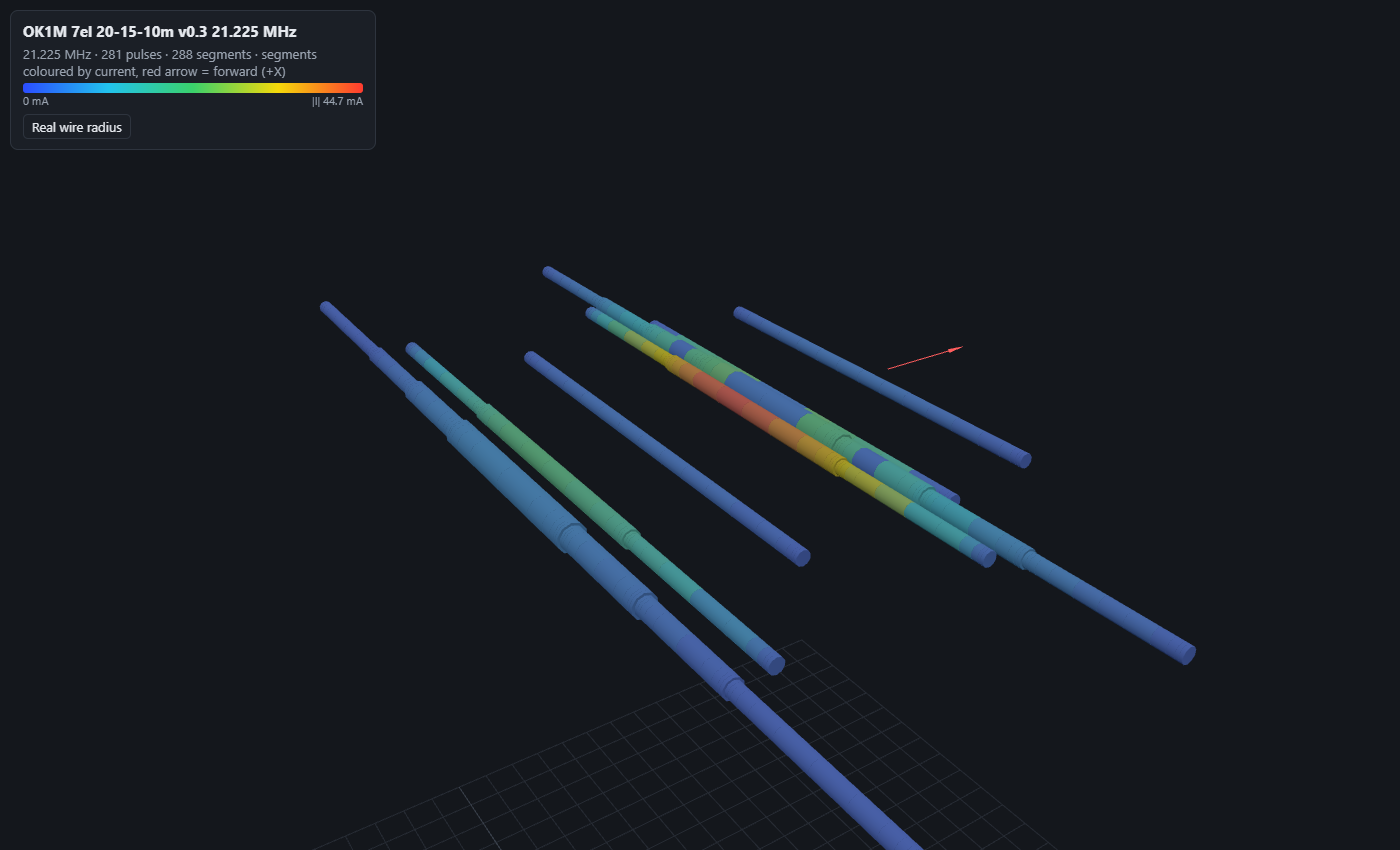
What it adds
- Repeatable runs – each antenna is a project with its models, settings and results
- HTML reports with plots and an interactive 3D view
- Validation – point-by-point comparison with MMANA-GAL exports
- Optimization of element lengths and positions (Levenberg-Marquardt), with a coarse grid scan to find the right starting area first
- Comparison of two model versions, with a graphical overview of changed dimensions
How accurate is it?
The platform is only useful if its numbers match MMANA-GAL pro, so it is checked against that program on the same model. On the reference 9-element antenna the pulse positions are identical and the largest differences are:
R ±0.07 Ω · jX ±0.15 Ω · SWR ±0.007 · Ga ±0.013 dB · F/B ±0.02 dB
Two more antennas served as additional checks. The 7-element Yagi was not used for calibration, and a 40 m vertical with radials verified the feed at a junction of several wires.
Antennas in the repository
- 9-element and 7-element multiband Yagi for 20, 15 and 10 m
- 4-element Yagi for 15 m
- 2-element antenna for 40 m
- 40 m vertical and directed verticals for 40 and 80 m
Quick start
It needs Python 3.10 or newer.
git clone https://git.ok1kvk.cz/RybkaLabs/ok1m-pymininec3.git
cd ok1m-pymininec3
pip install -e .
python -m ok1m_pymininec3 path/to/antenna.maa
Source code and documentation: git.ok1kvk.cz/RybkaLabs/ok1m-pymininec3
73 & TNX